How to Inspire Millions More Americans to Ride Bicycles

Irvine bicycle, Irvine bicycle friendly,  melissafoxblog, Melissa Fox, melissajoifox, Irvine Commissioner Melissa Fox, Melissa Fox for Irvine City Council,votemelissafox, votemelissafox.com

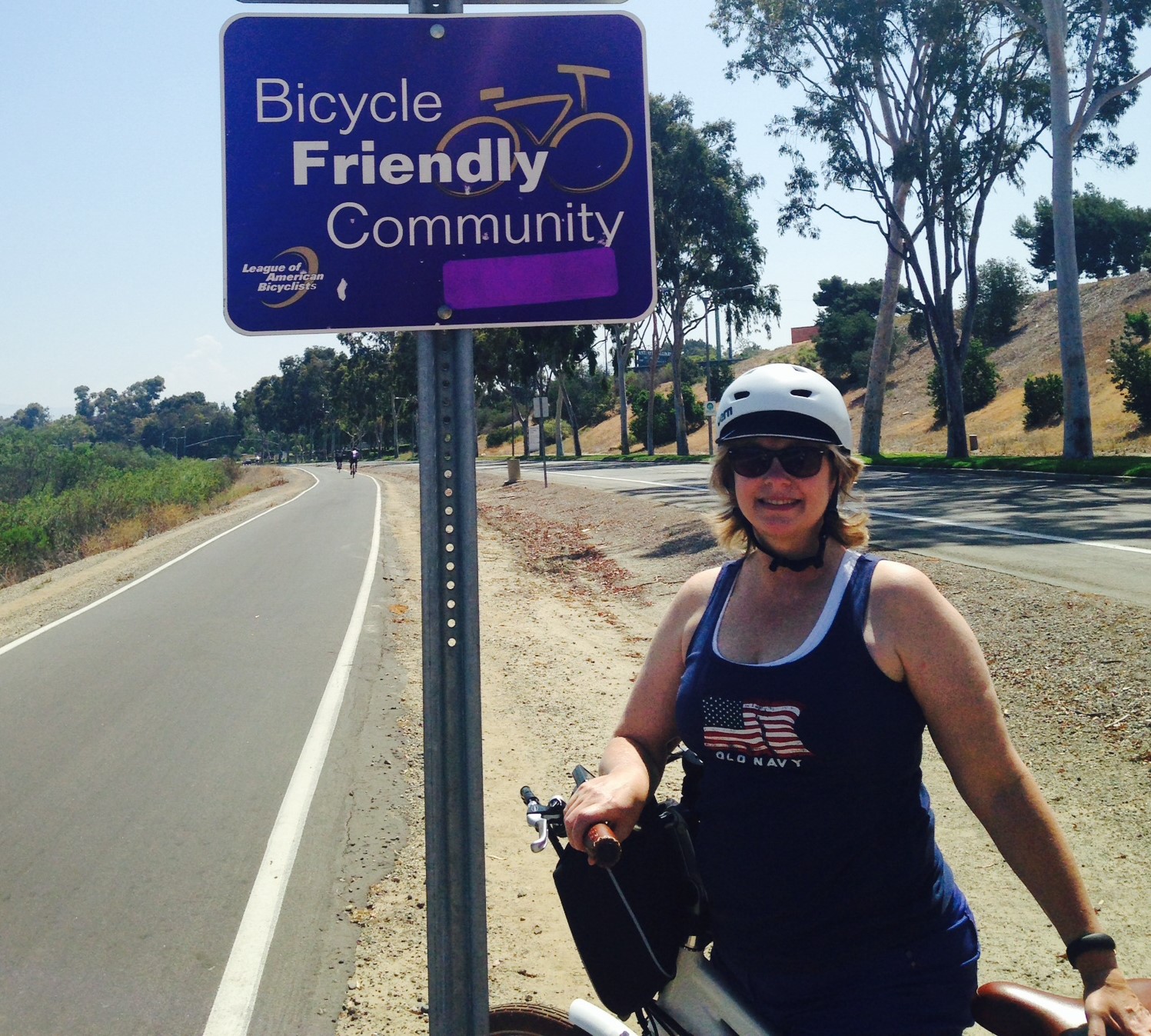
[Traffic congestion is increasing in Irvine. This article by Jay Walljasper, originally posted by PeopleforBikes, looks at ways that other cities have found to reduce traffic congestion by taking steps that encourage and increase bicycle ridership. It is re-posted here with the author’s permission.  I’m proud that Irvine has been rated as a “Silver” bicycle-friendly city by League of American Bicyclists, but we can do better. As a member of the Irvine City Council,  I will work to cut traffic congestion,  increase our active transportation options, encourage bicycle riding for commuting and recreation, and improve safety for drivers, bike riders and pedestrians. — Melissa]
Washington, D.C.

You can see big changes happening across America as communities from Fairbanks to St. Petersburg transform their streets into appealing places for people, not just cars and trucks.

“Over the past five years we’re seeing an infrastructure revolution, a rethinking of our streets to accommodate more users — busways, public plazas, space for pedestrians and, of course, bike lanes,” says David Vega-Barachowitz of the National Association of City Transportation Officials. “More protected bike lanes is one of the most important parts of this.”

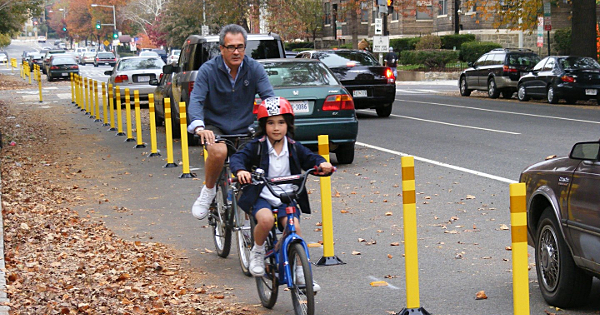
Protected bike lanes separate people on bikes from rushing traffic with concrete curbs, plastic bollards or other means — and sometimes offer additional safety measures such as special bike traffic lights and painted crossing lanes at intersections. Protected bike lanes help riders feel less exposed to danger, and are also appreciated by drivers and pedestrians, who know where to expect bicycles. Streets work better when everyone has a clearly defined space.

The continuing evolution of bicycling

Protected bike lanes are standard practice in the Netherlands, where 27 percent of all trips throughout the country are made on bicycles. That’s because more women, kids and seniors along with out-of-shape, inexperienced riders feel comfortable biking on the streets. Dutch bike ridership has doubled since the 1980s, when protected bike lanes began to be built in large numbers.
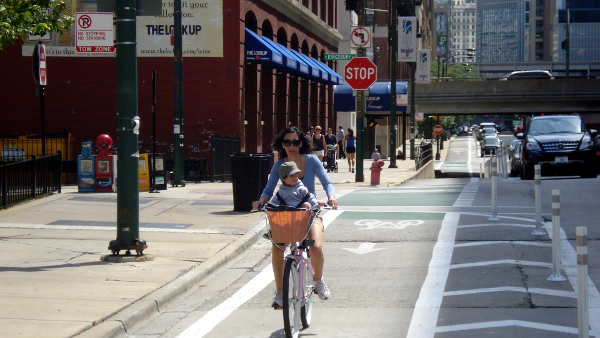
Chicago

American communities, by contrast, paint bike lanes on the street, often squeezed between parked cars and busy traffic. With just a white line dividing bicyclists from vehicles, it’s no surprise that only a small percentage of Americans currently bike for transportation.

“Conventional bike lanes have not worked well to get new people on bikes — they serve mostly those already biking,” says Martha Roskowski, vice president of local innovation for PeopleForBikes. “It’s time to evolve the bike lane.”

Nearly two-thirds of Americans would bicycle more if they felt safer on the streets, reports the Federal Highway Administration. Protected bike lanes, along with public bike share systems, are two of the best ways to get more people out on bikes, according to a growing chorus of transportation leaders.

Protected lanes have recently popped up in more than 30 communities across the U.S. from Munhall, Pennsylvania, to Temple City, California, with many additional projects set to open later this year.

Bicycling Goes Mainstream

Montreal is North America’s pioneer in protected lanes. Inspired by Dutch, Danish and German examples, the city established a network of protected lanes that now covers more than 30 miles. The idea began to stir Americans’ imaginations in 2007 when New York mayor Michael Bloomberg and transportation commissioner Janette Sadik-Khan launched plans to tame the city’s mean streets. New York has since built 43 miles of protected lanes, with measurable results in safer streets and rising bike ridership.

New York’s first protected lanes provoked fierce opposition from a few people, but Paul White of the local bike and pedestrian advocacy group Transportation Alternative says the public debate has now shifted to “Where’s mine? How come that neighborhood has safe streets and we don’t — don’t my kids matter as much as theirs?”
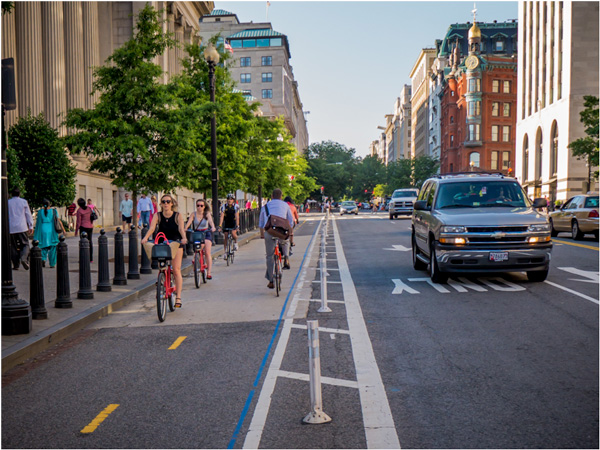
Washington, D.C.

Chicago aims to catch up with New York, and has recently opened 23 miles of protected lanes. San Francisco has built 12 miles so far. “Wherever we can, we try to put in protected bike lanes,” stresses Seleta Reynolds, former Section Leader of the San Francisco Municipal Transportation Agency who oversaw the installation of many of San Francisco’s protected bike lanes. Reynolds was recently tapped by Los Angeles Mayor Eric Garcetti to head the City’s Department of Transportation.

Other leaders in the field are Austin with 9 miles and Washington, DC with 7 miles, including a highly visible route down Pennsylvania Avenue leading to the U.S. Capitol, which has tripled the number of people riding bikes on the street. More protected bike lanes are planned or under construction in all of these cities.

This year more than 100 cities submitted proposals to PeopleForBikes to be part of the Green Lane Project, a competitive fellowship which offers cities financial, strategic and technical assistance valued at $250,000 per city to build or expand protected bike networks during a two-year period. Atlanta, Boston, Denver, Indianapolis, Pittsburgh and Seattle were selected in March to be the second round of Green Lane Project cities.

Just-released research on protected bike lanes in five of the first-round Green Lane Project cities (Chicago, San Francisco, Austin, Washington D.C. and Portland) shows why so many communities are eager to follow their lead. The federal Department of Transportation-funded study found an increase of ridership from 21 to 142 percent on streets featuring protected lanes in the first year, with an average increase of 75 percent. Meanwhile evaluation of protected bike lanes by the city of New York found that traffic injuries declined for all road users (not just bicyclists) by an average of forty percent.

Beyond the white stripe

What about the conventional bike lanes painted on the pavement — that simple white stripe we’ve grown used to? “They are the camel’s nose in the tent for growing bike use,” because they legitimize bicycling as transportation in the eyes of prospective riders and remind motorists to share the road, says Randy Neufeld, director of the SRAM Cycling Fund.
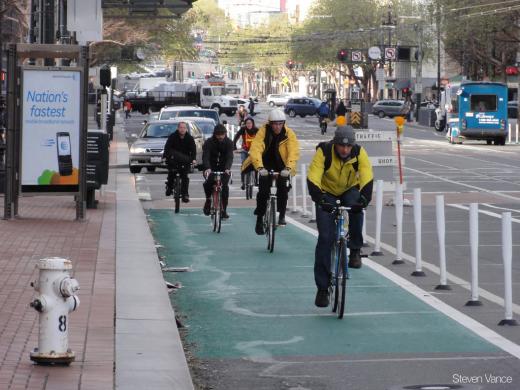
San Francisco

“Conventional bike lanes can work very well on a two-lane street with light traffic and slow speeds,” notes Roskowski. “But they are not enough for busy streets and fast traffic, which need an extra degree of separation between bicycles and motor vehicles.”

That’s the logic embraced by Dutch traffic engineers, which has doubled the number of bicyclists in the Netherlands. According to the Dutch Design Manual for Bicycle Traffic, physical separation of bicyclists from motor vehicles is recommended for any urban street with more than two lanes or where the speed limit exceeds 50 km per hour (31 mph).

One problem with conventional bike lanes is that they raise expectations beyond what they can deliver. “Cities all over the country painted stripes on busy streets, and when these lanes attract only a modest increase in bicyclists, city officials conclude there is only limited interest in bicycling,” notes PeopleForBikes president Tim Blumenthal. “A lot of people just won’t venture out on busy roads without a greater level of protection from traffic. That’s where protected bike lanes come in.”

Protected bike lanes benefit everyone, not just people riding bikes

“We are at a turning point in how we think about bikes,” notes Martha Roskowksi. “This change is being driven by cities preparing for the future. Mayors, elected officials, business leaders and citizens want their cities to be resilient, sustainable and attractive, and they realize bikes and protected bike lanes can help achieve that. These new bike lanes make the streets safer for everyone and improve city life for people who will never even get on a bike.”
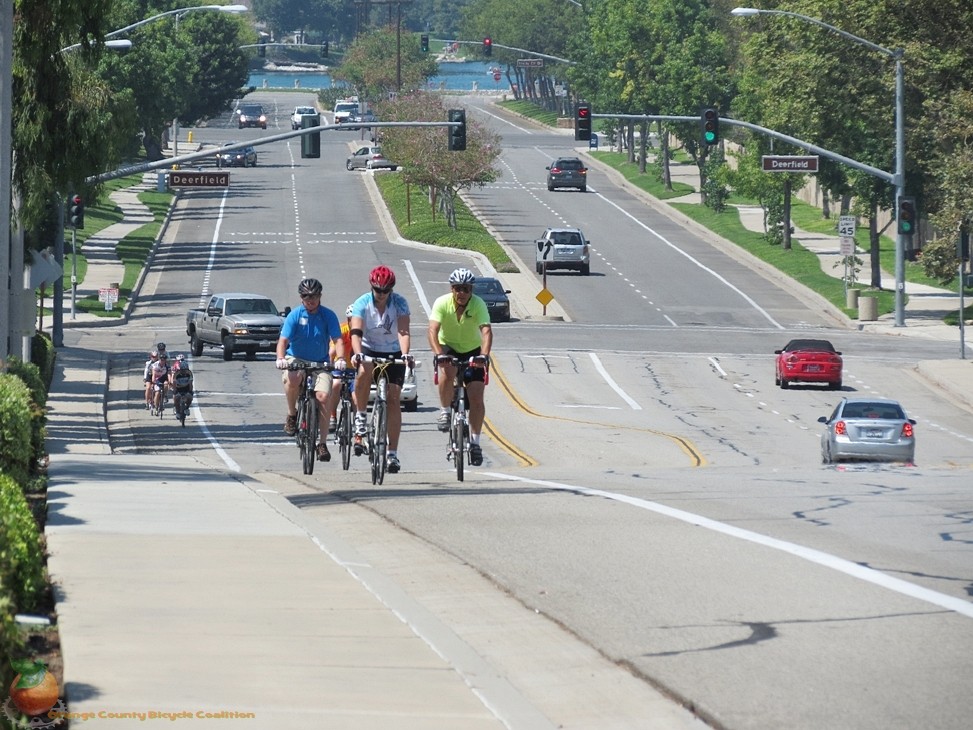
Irvine

Here are some of the benefits of protected bike lanes enjoyed by the entire community:

Attract and Keep a Talented Workforce: Richard Florida, originator of the Creative Class strategy for urban prosperity, contends that safe, convenient bike lanes are important to communities that want to attract entrepreneurs and sought-after workers in creative fields — not just young hipsters, but those with kids too. “Traffic-free bike paths become especially important to them,” Florida said about young families in the New York Daily News.

Expand Economic Opportunities: Chicago mayor Rahm Emanuel promised to build 100 miles of protected bike lanes in his first term as part of a strategy to attract high-tech firms to the city. In Austin, Texas, Cirrus Logic, a computer company, moved from the suburbs to downtown two years ago because the area’s bike trails and plans for protected lanes made the firm “more attractive as an employer,” explains PR director Bill Schnell. “We can’t just pluck anybody for our jobs. The people we want are mostly younger, and biking is part of the equation for them.”

Boost Local Businesses: A study of protected bike lanes on 9th Avenue in New York City showed a 49 percent increase in retail sales at businesses on the street. Another study in San Francisco found 65 percent of merchants on Valencia Street reporting that protected bike lanes were good for business. A study done in Portland shows that customers arriving on bike buy 24 percent more at local businesses than those who drive.

Irvine

Make the Streets Safer for Everyone: Not only are fewer bicyclists involved in accidents on streets with protected lanes, but pedestrians and motorists are safer too. A study of Columbus Avenue in New York City after protected bike lanes were added found a 34 percent decline in overall crashes.

Save Municipalities Money: Building protected bike lanes to move more people is “dirt cheap to build compared to road projects,” says Gabe Klein, former transportation commissioner in Chicago and Washington, D.C. Cities of all sizes find that protected lanes can serve more people using existing infrastructure without the economic and environmental costs of widening streets.

Reduce Tension Between Bicyclists and Motorists: “If you actually give bicyclists a designated place in the road, they behave in a way that’s more conducive for everyone getting along,” explains Jim Merrell, campaign manager for the Chicago’s Active Transportation Alliance. He points to recent findings that bicyclists stop for red lights 161 percent more often at special bike signals on the city’s new Dearborn Avenue protected lanes. And a study of protected lanes on Chicago’s Kinzie Street shows that half of cyclists report improved motorist behavior on the street.

Ease Traffic Congestion: Chad Crager, interim Bicycling Program Manager in Austin, calculated that the city’s ambitious network of protected lanes will create significantly more street capacity downtown if only 15 percent of commuters living within three miles of downtown switch from cars to bikes and just seven percent of those living three-to-nine miles.

Decrease Pollution & Curb Climate Change: A person traveling four miles to work and four miles back on a bike every day instead of a car means 2000 pounds less carbon (which translates to a five percent reduction downsizing the average Americans’ carbon footprint) and reductions in other pollutants fouling our air, according the Worldwatch Institute.

[Don’t forget — we can talk about increasing bicycle ridership and cutting traffic congestion in Irvine (or about something entirely different) at our up-coming Irvine “Wine & Dine” Bike Tour with Commissioner Melissa Fox! on Friday, July 18th at 6:00 PM when we’ll meet for dinner, e-biking, and wine tasting at Pedego Irvine.  Click here for details!]
Join Us on an Irvine “Wine & Dine” Bike Tour with Commissioner Melissa Fox!

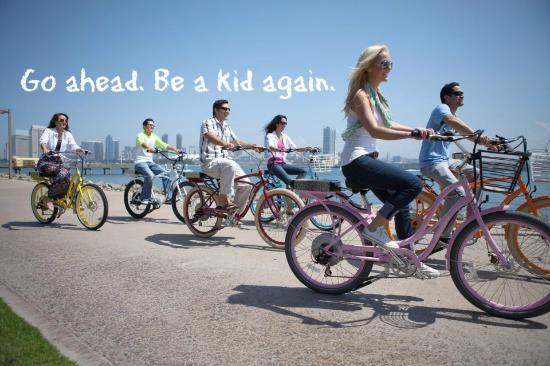
pedego-junction-electricJoin us on Friday, July 18th, at 6:00 PM for a terrific summer evening starting with a light dinner before we ride into the sunset on an electric bike tour of some of Irvine’s most picturesque bikeways!

It’s the Irvine “Wine & Dine” Bike Tour with Commissioner Melissa Fox!

First, we’ll meet at Pedego Irvine, at 4624 Barranca Parkway, Irvine 92604

melissafoxblog, Melissa Fox, melissajoifox, Irvine Commissioner Melissa Fox, Melissa Fox for Irvine City Council

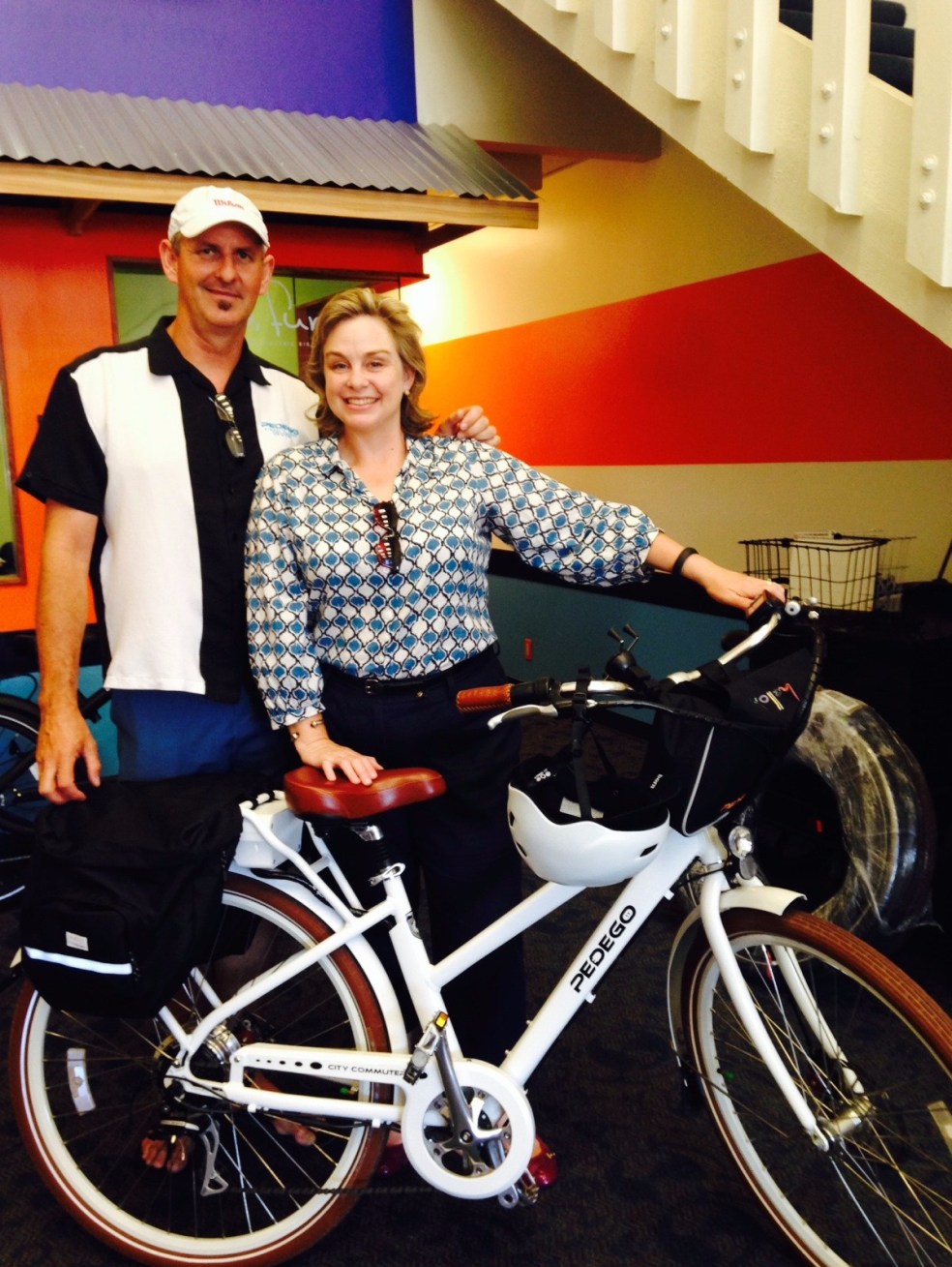
Irvine Community Services Commissioner Melissa Fox with Irvine Pedego owner Bob Bibee.

Then, we’ll have a light catered dinner.

Next, we’ll ride our Pedego Electric Bicycles on a sunset tour of Irvine’s bikeways.

Lastly, we’ll return to Pedego Irvine for a wine tasting provided by a boutique winery!

Cost is only $30 for a Mediterranean wrap, salad and hummus, electric bike rental, and wine tasting!

Please RSVP for dinner to Farrah at 323-428-3611.

We hope to see you there!

Did you know that Irvine has 301 miles of on-street bike lanes and 54 miles of off-street bikeways. Our bicycle trails are some of the most beautiful and peaceful places in Irvine.

Also, Irvine been rated as “Silver” Bicycle Friendly Community by the League of American Bicyclists.  This makes Irvine the most bicycle-friendly city in Southern California — and we can do ever better!

Electric bicycles provided by Pedego Irvine. Pedego Electric Bicycles are made right here in Irvine!

What: Irvine “Wine & Dine” Bike Tour with Commissioner Melissa Fox!

Co-Hosted by UCI Professor Catherine Liu.

When: Friday, July 18th at 6:00 PM

Where: Meet-up at Pedego Irvine, 4624 Barranca Parkway, Irvine 92604

Cost: $30 for dinner, electric bike rental, and wine tasting!


Thank You Ebell Club of Irvine for Jeffrey Open Space Trail Botanical Signs!

Jeffrey Open Space Trail, Melissa Fox, Melissa Fox for Irvine, melissajoifox, melissafoxblog.com

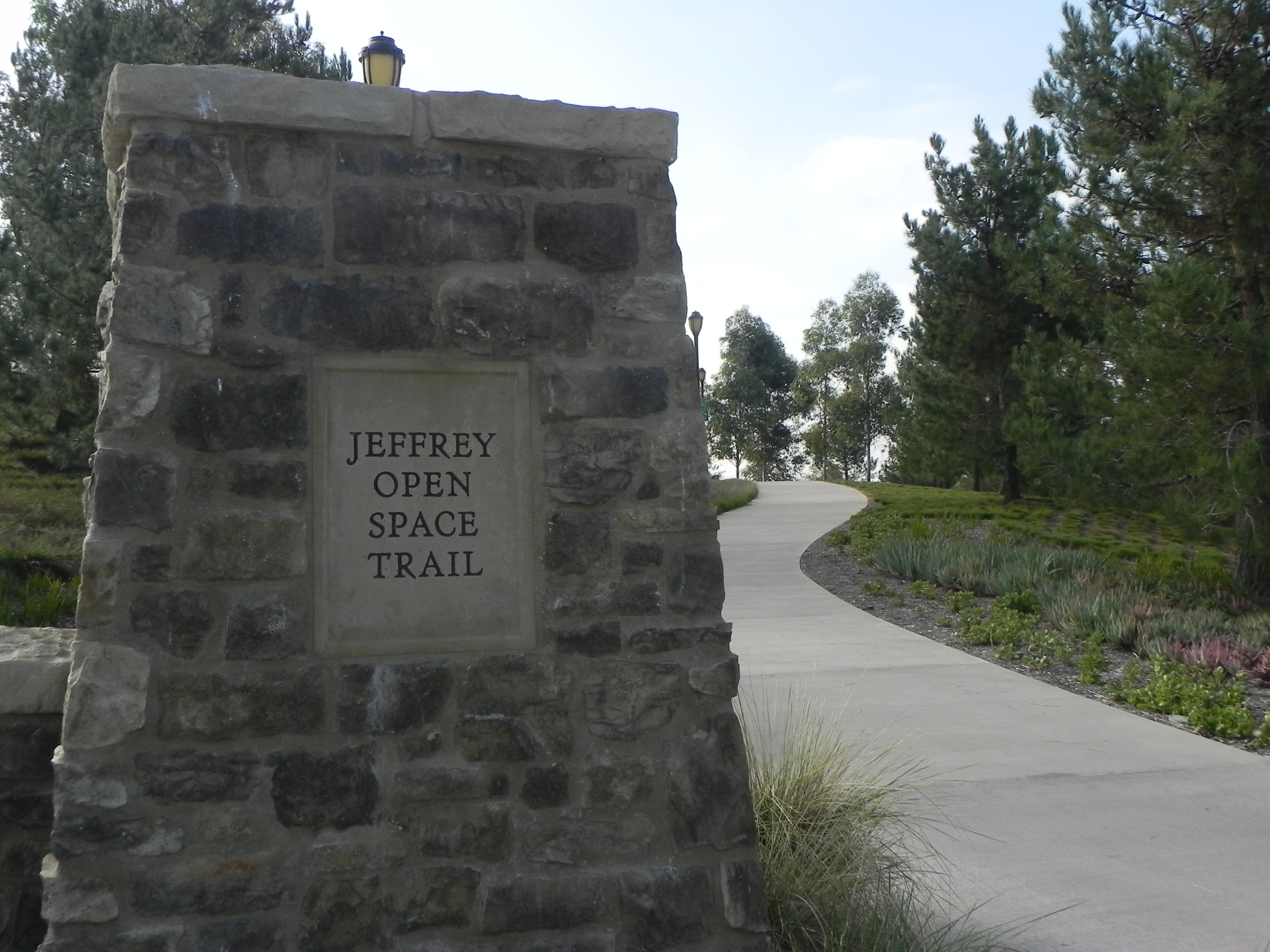
Thank you to the Ebell Club of Irvine for donating and installing botanical signs along the Jeffrey Open Space Trail!

Working in concert with the city of Irvine, the Ebell Club of Irvine recently installed nine additional botanical signs along the Jeffrey Open Space Trail – a landscaped, grassy area that currently runs along Jeffrey Road from Trabuco to Irvine Boulevard.

Melissa Fox, Melissa Fox for Irvine, melissajoifox, melissafoxblog.com

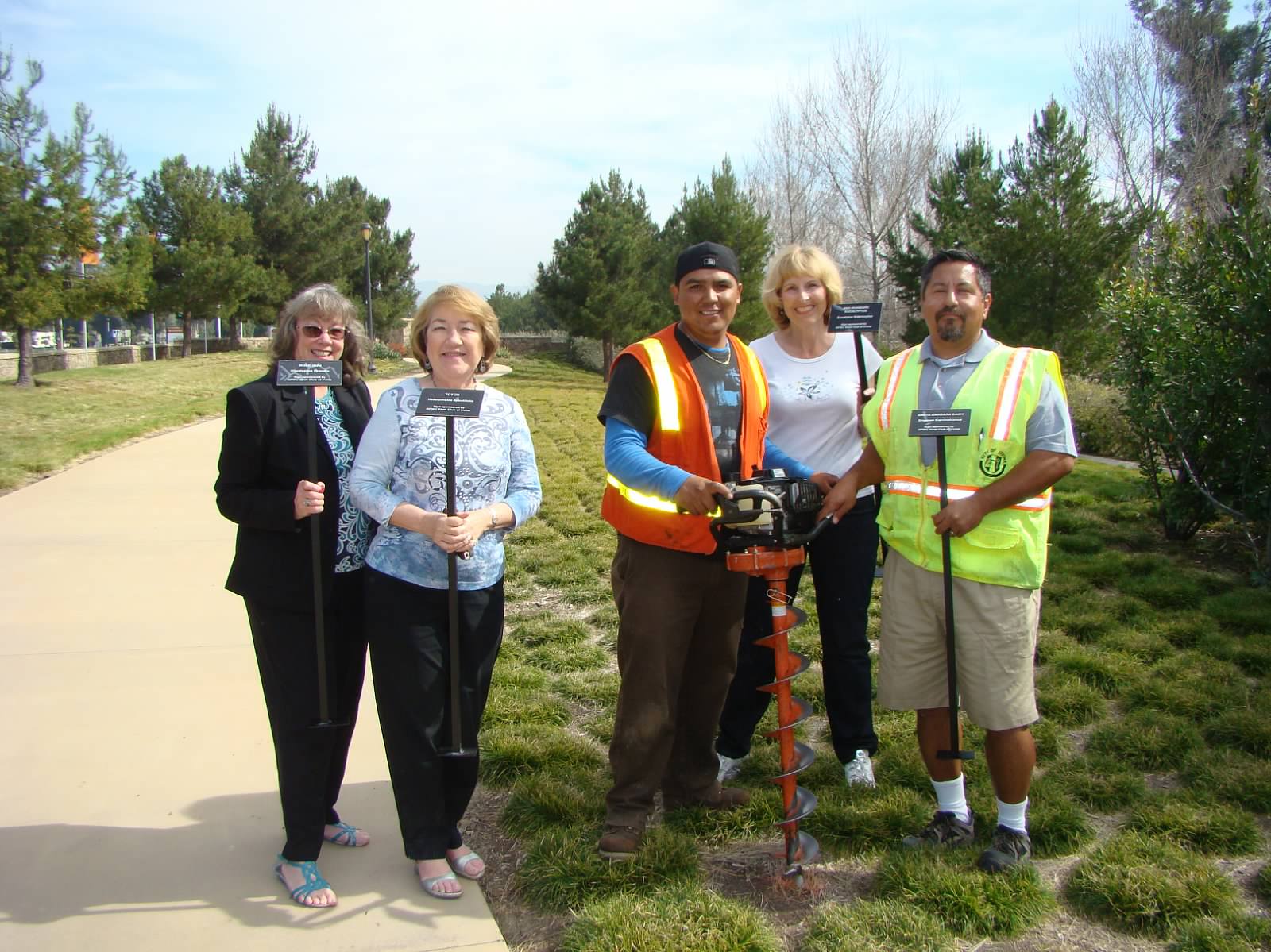
Ebell Club of Irvine members Anne Schorr, Joann Coover, and Barbara Reynolds with botanical signs and the installers at the Jeffrey Open Space Trail.

Along the paved trail are periodic wide spots with plaques that chronicle the history of the Irvine Ranch. Plants native to the Irvine region have been planted throughout the park.

Shortly after the trail opened, the Ebell Club of Irvine began working with the city of Irvine to install botanical signs along the pathways.

To date, 33 signs have been installed in the park area between Trabuco Road and Irvine Boulevard.

The next portion of the trail, scheduled to open later this year, will reach from Trabuco Road to I-5. Club members are continuing to recycle aluminum cans in order to raise funds for additional signs. They are also inviting other Irvine service organizations and community members to become sign sponsors for the plants in the new portion.

Melissa Fox, Melissa Fox for Irvine, melissajoifox, melissafoxblog.com

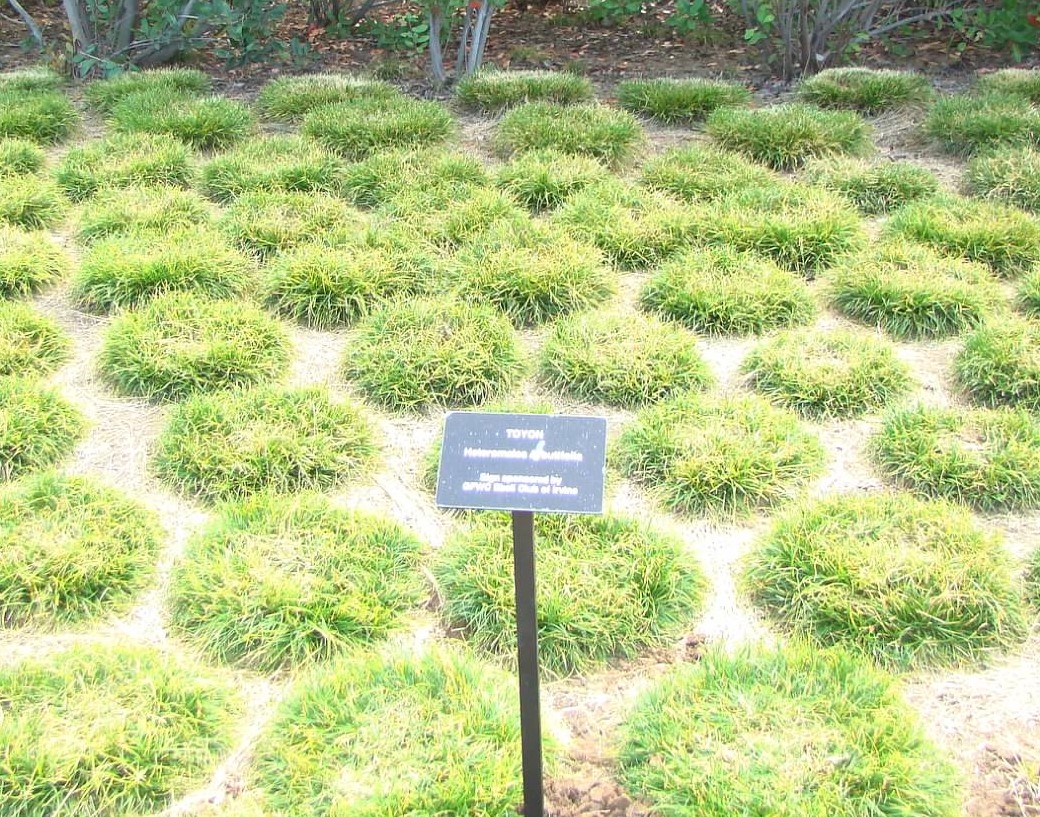
Botanical marker placed on the Jeffrey Open Space Trail by the Ebell Club of Irvine.

A botanical sign costs about $50 to purchase and $30 to install. Each sponsor will be identified at the bottom of the sign.

Anyone interested in sponsoring a sign should contact Barbara Reynolds, conservation chairwoman, at 949-559-1545.

The Ebell Club of Irvine was organized on March 5, 1974, and is a proud member of the General Federation of Women’s Clubs.  Honoring the motto of Unity in Diversity, the Club comes together as unique individuals dedicated to community improvement through activities and fund-raising projects.  Their mission is to enhance the lives of others in Irvine through volunteer service.

Meeting are held on the first Tuesday of each month, September through June, at 6:30 PM.  For more information, call 714-832-0791.

The Jeffrey Open Space Trail (JOST) is a unique resource for the residents of the City of Irvine. This open space corridor constitutes an important element in the City’s overall Open Space system, linking the conservation and open space lands within the City. The trail will travel approximately five miles through Irvine, from just past Portola Parkway in the north to the Quail Hill open space in the south. Currently, the section from Trabuco to Irvine Blvd. (section 2) is completed. Construction of sections 1 and 3 is currently underway. The JOST provides a key linkage extending from the Pacific Ocean to the Santa Ana Mountains and Cleveland National Forest. The Jeffrey Open Space Trail Community Consensus Plan focuses specifically on the portion of the Spine extending from Interstate 5 to the Natural Communities Conservation Plan Lands north of Portola Parkway.

For more information about the Jeffrey Open Space Trail, see the Jeffrey Open Space Spine Community Consenus Plan (2003) (PDF).

Photo credits:

Top photo: Ellen Bell. Other photos: Anne Schorr. Used with permission.

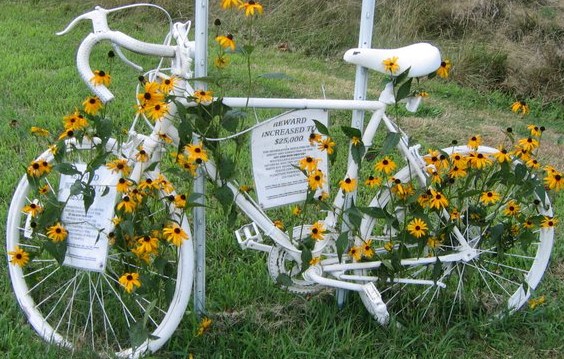
Join the Ride of Silence in Irvine on Weds., May 21, 2014, to Honor Cyclists Killed or Injured and Promote Sharing the Road

Ghost bike, Ride of Silence, melissafoxblog, melissajoifox, Melissa Fox, Melissa Fox for Irvine, melissafoxblog.com, Irvine Commissioner Melissa Fox

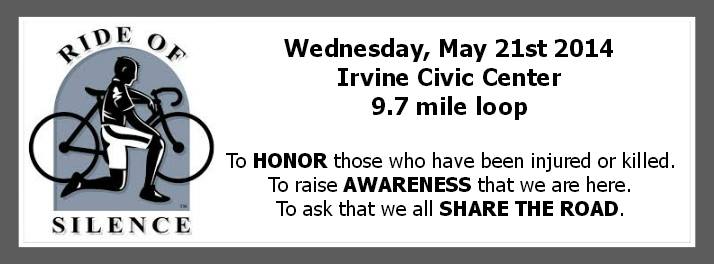
This Wednesday, May 21, 2014, during National Bike Month, the Ride of Silence will begin in North America and roll across the globe – including Irvine.

Founded in 2003 to honor cyclists who have been killed or injured while cycling on public roadways, promote sharing the road, and provide awareness of bicycling safety, the Ride of Silence is a slow paced, single file bicycle ride in a silent procession.

Ride of Silence, melissafoxblog, melissajoifox, Melissa Fox, Melissa Fox for Irvine, melissafoxblog.com, Irvine Commissioner Melissa FoxAs I’ve written before, Irvine is indeed a wonderful city for biking, whether for commuting, exercising, or just enjoying the outdoors. We currently have 301 miles of on-street bike lanes and 54 miles of off-street bikeways. Our bicycle trails are some of the most beautiful, and peaceful, places in Irvine.

Yet in Irvine, as everywhere else, motorists must learn to better share the road safely with cyclists; that cyclists have the same rights to the road as motorists; and that cyclists are the most vulnerable users of the roadways.

Too often, although cyclists have a legal right to share the road with motorists, the motoring public isn’t aware of these rights, and sometimes not aware of the cyclists themselves.

Orange County has had 14 cyclists hit and killed by motorists since the last “Ride of Silence” on May 15th 2013. These individuals who lost their lives were fathers, mothers, sons, daughters, brothers, sisters, husbands, wives, boyfriends, girlfriends, friends, co-workers, as well as cyclists. We have no idea of the impact they may have had in this world because their lives was taken by a motorist.

The Ride of Silence asks its cyclists to ride no faster than 12 mph, wear helmets, follow the rules of the road and remain silent during the ride. There are no sponsors and no registration fees. The ride aims to raise the awareness of motorists, police and city officials that cyclists have a legal right to the public roadways. The ride is also a chance to show respect for and honor the lives of those who have been killed or injured.

When: Wednesday, May 21. Gather at 6 PM. Assemble at 6:30 PM. Ride at 7 PM.

Where: Irvine Civic Center, 1 Civic Center Plaza (near the flag poles in front of the Police Department)

Route: The route is a flat 9.7 mile loop around Irvine; we’ll take on-street bike lanes and off street bikeways. East on Alton then return on the San Diego Creek bikeway so we can be fully regrouped by the time we get back to the start.

More information, click here for the Orange County Bicycle Coalition or click here for Ride of Silence Orange County.

You can also learn more, and show your support, on the Ride of Silence – Irvine Facebook page and the Ride of Silence  National Facebook page.

In Memoriam  –  Bicyclists killed in Orange County since last year’s Ride of Silence:

Susan Stripko (June 2, Huntington Beach)
Chelsea Kashergen (June 20, Fullerton)
James Waller (June 28, Irvine/Laguna Beach)
Richard Paine (July 11, Fullerton)
Alberto Ramos (July 20, Stanton)
Debra Deem (Aug 27, Newport Beach)
Manuel Morales Rodriguez (Oct 30, Anaheim)
Michelle Lounsbury (Nov 4, Costa Mesa)
Paul Lin (Nov 6, Newport Beach)
Pete Tomaino (Dec 24, Laguna Hills)
Joseph (Joey) Robinson (Feb 2, Orange)
Matthew Liechty (Feb 19, Huntington Beach)
Alfanso Franco (Feb 20, Santa Ana)
Sean Severson (March 21, Fountain Valley)
Geneveve Hall (April 6, Huntington Beach)
Kathy Sieberhein (April 16, Huntington Beach)
Haitham Gamal (May 6, Dana Point)

ride of silence irvine


Celebrating National Bike Month in Irvine, the Most Bicycle-Friendly City in Southern California

National Bike Month,  melissafoxblog, melissajoifox, Melissa Fox, Melissa Fox for Irvine, melissafoxblog.com, Irvine Commissioner Melissa Fox

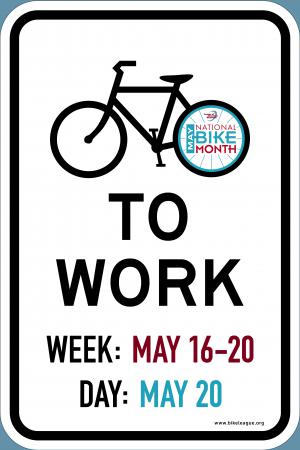
May is National Bike Month, sponsored since 1956 by the League of American Bicyclists and celebrated in communities from coast to coast.

 melissafoxblog, melissajoifox, Melissa Fox, Melissa Fox for Irvine, melissafoxblog.com, Irvine Commissioner Melissa FoxAccording to the League of American Bicyclists, “National Bike Month is a chance to showcase the many benefits of bicycling  –  and encourage more folks to giving biking a try . . . Whether you bike to work or school; ride to save money or time; pump those pedals to preserve your health or the environment; or simply to explore your community, National Bike Month is an opportunity to celebrate the unique power of the bicycle and the many reasons we ride.”

National Bike Month is special this year in Irvine: the League of American Bicyclists has recognized Irvine as a “Silver” Bicycle Friendly Community and the most bicycle-friendly city in Southern California. Only three California cities with populations of 50,000 or more were rated higher than Irvine, all in Northern California.

Shady Canyon Trail Irvine, irvine bicycle trails, melissafoxblog, Melissa Fox, melissajoifox, Irvine Commissioner Melissa FoxEach year, the League evaluates all 50 states, as well as numerous cities, businesses, and universities, for the extent to which they have made “bicycling a real transportation and recreation option for all people.” The Bicycle Friendly Community Award is for a three-year period and comes in five levels: Diamond, Platinum, Gold, Silver and Bronze, measured by categories such as bike ridership, bicycle friendly laws and ordinances, availability of bike lanes, and how often bicycling classes are offered.  According to the League, “A community recognized by the League as Bicycle Friendly welcomes bicyclists by providing safe accommodation for cycling and encouraging people to bike for transportation and recreation.”

In its previous assessment in 2009, Irvine received a “Bronze” award, which means that the League believes that Irvine has made significant progress in bicycle friendliness.  One reason for Irvine being perceived as more bicycle friendly is the amendment and updating of Irvine’s Bicycle Transportation Plan.  The plan is a detailed, 260-page guiding document for the development and maintenance of a bicycle infrastructure network in Irvine that is safe, efficient, and enjoyable, and includes plans for additional on-street bicycle lanes and off-street bikeways and bicycle trails in the near future.

In addition, Irvine just undertook a major survey to better understand how residents, employees and visitors walk, bike or otherwise get around Irvine. The goal is to use this information to support, encourage, and improve the ways we can get around in Irvine, including walking and biking.

Irvine bicycle trails, melissafoxblog, Melissa Fox, melissajoifox, Irvine Commissioner Melissa Fox

As I’ve noted before on this blog, Irvine is indeed a wonderful city for biking, whether for commuting, exercising, or just enjoying the outdoors. We currently have 301 miles of on-street bike lanes and 54 miles of off-street bikeways.  Our bicycle trails are some of the most beautiful, and peaceful, places in Irvine.  My own local neighborhood favorite is the Hicks Canyon Bicycle Trail.  There is also the Woodbridge Trail, the Walnut Trail, the Jeffrey Open Space Trail, the Sand Canyon/Quail Hill Loop Trail, the Back Bay Loop Trail, the West Irvine Trail/Peters Canyon Bikeway, the Shady Canyon Loop Trail, and Peters Canyon Wash Trail.

You can get great maps of Irvine’s bike trails and bikeways at the City of Irvine Bikeways page, including an amazing interactive map of Irvine’s bike trails.

The page also provides important bicycle safety tips and information. As part of our celebration of National Bike Month, the City of Irvine, in collaboration with the Orange County Transportation Authority (OCTA), is stressing the need for safe and smart biking, and for special attention to bike safety by youth, adults, and automobile drivers.  We also encourage taking the low-cost cyclist education classes and urban cycling workshops offered by the Orange County Bicycle Coalition.

So for this year’s National Bike Month, let’s celebrate our Silver Award from the League of American Bicyclists as the most bicycle-friendly city in Southern California!

And as an Irvine Community Services Commissioner – and even more as an Irvine mom who enjoys riding our city’s bicycle trails with her teen-age son – Let me say: “Happy National Bike Month, Irvine!”

Earth Day: Preserving Irvine’s Earth-Friendly Tradition

earth day 2014 poster.  Irvine Commissioner Melissa Fox. melissafoxblog.com.

Irvine’s Earth-Friendly Tradition

The City of Irvine has long been a leader in earth-friendly environmental policies, green technology and environmental awareness.  Irvine’s environmental programs have been on the leading edge of advances in green building and construction, environmental education, recycling, water conservation, waste disposal, and energy saving.

Irvine has also demonstrated its commitment to green buildings through the enactment of the Irvine Build Green Program, which encourages builders to create environmentally sensitive, healthier developments for its residents, businesses and visitors.

sanjoaquin.  Irvine Commissioner Melissa Fox. melissafoxblog.com.  photo by Geoff Fox.

In addition, Irvine’s Green Ribbon Environmental Committee, under the jurisdiction of the Community Services Commission, advises the City Council on matters related to climate protection, energy, recycling, waste management, sustainability, transportation, and water, helping the City serve the community through advancing environmental policy initiatives and programs.

The Irvine Chamber of Commerce is also helping Irvine get greener with its new Irvine Green Business Certification Program, which helps improve its members’ bottom lines by reducing energy and waste costs, and by providing access to tax credits, rebates and incentives. This certification will also allow the Chamber to encourage Irvine businesses to take steps to “green” their business as a means to protect the environment, save money, and use energy more efficiently.

Irvine.green.sanjoaquin.  Irvine Commissioner Melissa Fox. melissafoxblog.com. photo by Geoff Fox.

Irvine also offers numerous other environmentally conscious programs, including the National Mayor’s Challenge for Water Conservation, in which Irvine residents and businesses are encouraged to join this friendly, national competition by pledging to conserve water and other resources. This program and other environmental programs are detailed on the City of Irvine’s website, as are the City’s Annual Earth Day Tips to Save Resources and Money.

Irvine’s Open Spaces

Irvine.sunset.  Irvine Commissioner Melissa Fox. melissafoxblog.com. photo by Geoff Fox.

One of the best — and most distinctive — qualities of Irvine is our commitment to preserving open space. The City of Irvine has more than 16,000 acres of permanently preserved parkland and open space – remarkable for a city of our size.

In 1974, early in our city’s history, voters approved multi-million dollar measures to fund public parks and recreational facilities, and for the acquisition and development of bicycle trail and hiking trail improvements.

In 1989, the City negotiated an historic agreement with the Irvine Company that set aside more than 9,500 acres as permanent open space marshlands, bike trails, parks, nature conservancies and agricultural areas, protecting fully one-third of the city from development.

In addition, in 2006, nearly 37,000 acres of the Irvine Ranch were selected as a National Natural Landmark, a designation which reflects the outstanding condition, rarity, diversity, and value to science and education of the natural resources on the land.

Irvine.trail.  Irvine Commissioner Melissa Fox. melissafoxblog.com. photo by Geoff Fox.

As our Irvine Open Space Preserve website explains, “Since its incorporation in 1971, Irvine has had a strong desire to balance the built and natural environment. As this incredible master-planned community has grown, each phase of development has been accompanied by the preservation and enhancement of natural open spaces, creating the network of parks, trails, and wildlands that residents and visitors may enjoy today and for generations to come.”

Irvine: A Bicycle-Friendly City

Irvine bicycle sunset.  Irvine Commissioner Melissa Fox. melissafoxblog.com.

Irvine has also been recognized as the most bicycle-friendly in Southern California by the League of American Bicyclists, the oldest and largest membership organization of cyclists in the United States.

Irvine is indeed a wonderful city for biking, whether for commuting, exercising, or just enjoying the outdoors. We currently have 301 miles of on-street bike lanes and 54 miles of off-street bikeways.  Our bicycle trails are some of the most beautiful, and peaceful, places in Irvine.

We also know that we can — and will — do even better in the future.  As in other California cities, Irvine residents primarily rely on their cars to get around town.  But Irvine has also made it a priority to support and encourage other, environmentally conscious, forms of transportation – including walking and biking.

In fact, we’ve just conducted an important study to better understand how residents, employees, and visitors walk, bike or get around Irvine. The results of this study will help us make better transportation decisions for our community, and help us increase the ease and safety of biking and walking around town.

Irvine as Solar Capitol USA

Irvine Commissioner Melissa Fox at Solar Decathlon

Irvine Commissioner Melissa Fox at Solar Decathlon

Irvine is now an international center for the development of efficient, environmentally conscious solar energy as the home of the United States Department of Energy’s Solar Decathlon, the award-winning international competition held every two years that challenges college teams to design, build, and operate solar-powered houses that are cost-effective, energy-efficient, and attractive.

In 2013, the Solar Decathlon was held for first time outside of Washington, D.C.– at the Great Park, here in Irvine. The 2015 Solar Decathlon will be held once again here in Irvine, which can now claim the title of the nation’s energy innovation capitol.

Keeping Our Commitment

From its beginnings as a visionary master-planned community developed from the Irvine Ranch, the City of Irvine has striven to be simultaneously people-friendly, business-friendly, and earth-friendly. That success can continue into the future, as long as we insist that each phase of our City’s development be accompanied by careful planning and the preservation and enhancement of our environment.

Take the City of Irvine’s Walk and Bike Survey!

Irvine bicycle sunset

As Irvine grows, our transportation needs are becoming more complex.  As in other California cities, Irvine residents primarily reply on their cars to get around town.  But Irvine has also made it a priority to support and encourage other forms of transportation – including walking and biking.

Recently, Irvine was recognized as a “Silver” Bicycle Friendly Community by the League of American Bicyclists, the oldest and largest membership organization of cyclists in the United States. We are justifiably proud that we have 301 miles of on-street bike lanes and 54 miles of off-street bikeways in Irvine, providing safe and efficient bikepaths for the casual to the expert bike rider.

The City of Irvine is now conducting an important study to better understand how residents, employees and visitors walk, bike or get around Irvine.

Participants who take the Active Transportation Survey on or before February 28, 2014, [update: the deadline for taking the survey has now been extended to March 20, 2014] will be entered in a drawing to win prizes from local bike and retail shops in Irvine, including Pedego Electric Bikes and Jax Bicycle Center.

The City of Irvine values your input, which will help inform transportation decisions that affect our community.  For more information, contact Mike Davis, Transit Programs Administrator, at 949-724-6288.

Click here to take the survey.

P.S. You can get great maps of Irvine’s bike trails and bikeways at the City of Irvine Bikeways page, including an amazing interactive map of Irvine’s bike trails.  The page also provides bicycle safety tips and information and a bike safety video.

Irvine Most Bicycle Friendly City in Southern California

ar128234694995674

As an Irvine Community Services Commissioner – and even more as an Irvine mom who enjoys riding our city’s bicycle trails with her teen-age son – I am happy that Irvine has been recognized as a “Silver” Bicycle Friendly Community by the League of American Bicyclists, the oldest and largest membership organization of cyclists in the United States.

Each year, the League evaluates all 50 states for the extent to which they have made “bicycling a real transportation and recreation option for all people.”  Communities, as well as businesses and universities, are evaluated through a voluntary application process.  The Bicycle Friendly Community Award is for a three-year period and comes in five levels: Diamond, Platinum, Gold, Silver and Bronze, measured by categories such as bike ridership, bicycle friendly laws and ordinances, availability of bike lanes, and how often bicycling classes are offered.  According to the League, “A community recognized by the League as Bicycle Friendly welcomes bicyclists by providing safe accommodation for cycling and encouraging people to bike for transportation and recreation.”

In its previous assessment in 2009, Irvine received a “Bronze” award, which means that the League believes that Irvine has made significant progress in bicycle friendliness.  One reason for Irvine being perceived as more bicycle friendly is the amendment and updating of Irvine’s Bicycle Transportation Plan.  The plan is a detailed, 260-page guiding document for the development and maintenance of a bicycle infrastructure network in Irvine that is safe, efficient, and enjoyable, and includes plans for additional on-street bicycle lanes and off-street bikeways and bicycle trails in the near future.

Irvine is indeed a wonderful city for biking, whether for commuting, exercising, or just enjoying the outdoors. We currently have 301 miles of on-street bike lanes and 54 miles of off-street bikeways.  Our bicycle trails are some of the most beautiful, and peaceful, places in Irvine.  My own local neighborhood favorite is the Hicks Canyon Bicycle Trail.  There is also the Woodbridge Trail, the Walnut Trail, the Jeffrey Open Space Trail, the Sand Canyon/Quail Hill Loop Trail, the San Diego Creek Trail, the Back Bay Loop Trail, the West Irvine Trail/Peters Canyon Bikeway, the Shady Canyon Loop Trail, and Peters Canyon Wash Trail.

You can get great maps of Irvine’s bike trails and bikeways at the City of Irvine Bikeways page, including an amazing interactive map of Irvine’s bike trails.  The page also provides bicycle safety tips and information and a bike safety video.

Silver is great — only three California cities with populations of 50,000 or more were rated higher than Irvine, all in Northern California.  We are the best bicycle city in Southern California – and we can – and we will — do even better!

Irvine’s Parks and Recreation Rated in America’s Top 10

4737824948_8fb948663d_b

According to the financial advice website NerdWallet, Irvine is the 9th best city in America for recreation and an active lifestyle.

That’s great – but I think we should have been rated even higher.

The website asked “Which cities are best for recreation and living an active lifestyle? If you value exercise and personal health, then finding a city that can offer you a variety of recreational activities should be high on your list of priorities when it comes to choosing a place to live. Cities with lots of parkland, playgrounds and recreation centers can provide you with plenty of options to maintain your particular level of physical activity.”

They then evaluated 95 American cities for recreational activities based on these questions:

  • Does the city have plenty of recreational options for those with varying skills and interests?  We assessed the volume of available options by reporting the number of recreational facilities per 100,000 residents.  Recreational facilities include ball diamonds, skateboard parks, basketball hoops, ice-skating rinks, golf courses, swimming pools and tennis courts.  Only public facilities were included.
  • Does the city have a lot of green space?  We included the acres of parkland as a percentage of city area.
  • Does the city have recreation options for those of all ages?  We included the number of recreation and senior centers per 20,000 residents.
  • Does the city have playgrounds?  We included the number of playgrounds per 10,000 residents to assess whether there were kid-friendly recreation options in the city.

Based on these criteria, their top cities were (1) Minneapolis, MN, (2) Madison, WI, (3) St. Paul, MN, (4) Cincinnati, OH, (5) Norfolk, VA, (6) Baton Rouge, LA, (7) Anchorage, AK, (8) Washington, D.C., (9) Irvine, CA, and (10) Pittsburgh, PA.

Here’s what they had that to say about Irvine:

“Irvine offers residents access to trails in the Irvine Ranch Conservancy, Bommer Canyon, Turtle Rock Nature Center and acres of open space. You can find aquatics centers, athletic fields, neighborhood and community parks, skate parks and tennis courts. The city has adult sports leagues for basketball, softball and soccer, and many youth sports options. The city provides an array of summer camps for children and UC Irvine’s Campus Recreation offers Anteater Recreation Summer Camps and weekend activities for local kids. Your dog can get some exercise on the nearly three acres of field at Central Bark.”

That’s all true – but, as I said, I think we should have been rated higher.

Unlike the other cities on the list – especially Minneapolis, Madison, St. Paul, and Anchorage – our parks and recreational facilities are open, accessible, and unfrozen all year. You can enjoy our parks and play most sports year round, and never have to shovel a path through the ice and snow.  And we don’t have many rain days, either.

Plus, they didn’t even mention the Orange County Great Park’s seven-acre North Lawn recreation area and the South Lawn’s soon-to-open four tournament-quality soccer fields, four full-size basketball courts, and new jogging and exercise trail.

Or Irvine’s Incredible Edible Park a 7.5 acre community garden, where volunteers  grow beans, broccoli, carrots, lettuce, oranges, potatoes and squash that are donated to the Second Harvest Food Bank of Orange County to help feed thousands of hungry families.

So, thank you, NerdWallet, for rating Irvine among the 10 very best cities in America for parks and recreational activities.

But in my opinion, we’re number one.