
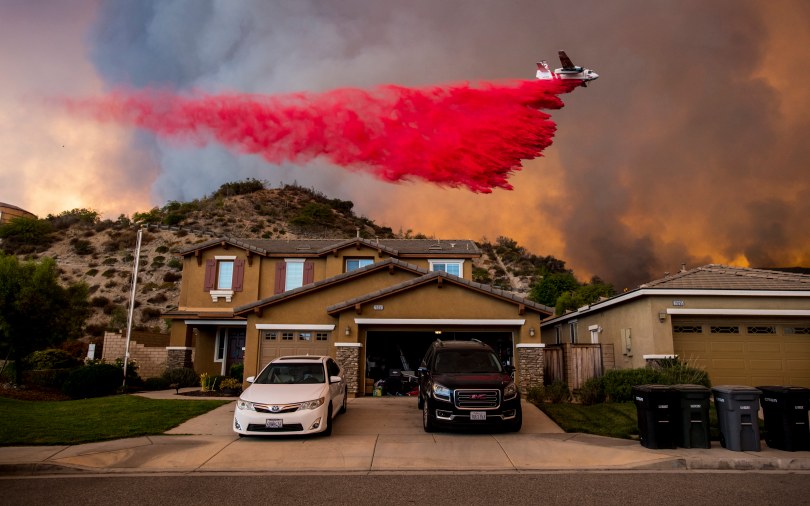
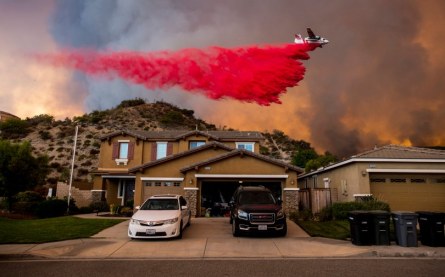
(Photo by Mark Rightmire, Orange County Register/SCNG)
My son, Max Fox, is an EMT and HazMat specialist. He had been studying firefighting and emergency management at the University of Alaska, Fairbanks, until he came home for the duration of the COVID-19 crisis. With wildfires raging across the state, I asked him about what he would advise local families that want to prepare for emergencies. Here is what he wrote:
“As Californians, there are certain emergencies that we should all be prepared for: earthquakes, fire, and flood. We should have Family Emergency Plans for these all too common occurrences.
 Family Emergency Plans should include (1) an emergency family communication plan in case of separation, (2) consideration of the special needs of each member of your household (such as medications or medical equipment), and (3) plans for your most important documents (such as identification and insurance).
Documents you should consider including as part of your Family Emergency Plan are:
- A copy of each family member’s driver’s license and passport
- Each family member’s Social Security card or number
- A copy of each family member’s birth certificate
- A copy of everyone’s medical records and list of vaccinations, including your pet’s
- Authorization for treatment
- Property titles for your car and home
- All of your bank, credit card and investment account numbers and corresponding customer service telephone numbers
- Health insurance and life insurance account information
- Photographs or videos of all of your property to make potential insurance claims easier
- Wills, as well as living wills and a power of attorney
- Your latest tax return
- Your marriage certificate
- Adoption and citizenship papers
- Military records
- Medications and eyeglass prescriptions
- Important files backed up on an external hard-drive
- Copies of your favorite family photographs
A Family Emergency Plan for the current COVID-19 pandemic should incorporate many of the same features.
For families with young children, plans should also include lists of other trusted adults who are able to look after your children should a parent become sick and/or hospitalized.
People with children — or people taking care of seniors — should also make a list that has everything the caregiver should know about the children and/or seniors, their allergies, any medical documentation that may be needed, as well as written authorizations for treatment.
Plans should also include provisions for care of your pets, if you are not able to leave them home or continue to care for them.
In an emergency, it is very easy to forget something, so an important part of making your plan should also include making a pre-prepared “go-bag” (a bag of stuff needed in an emergency that is already pack with everything you need). An emergency go-bag might include:
- At least three days of water for every member of the family
- Non-perishable food options, like nuts, canned goods and granola bars
- Changes of clothing and footwear for each member of the family
- Sleeping bags or rolled blankets
- First-aid kit supplies
- Emergency supplies, such as a battery-operated radio, a flashlight with extra batteries, duct tape, plastic bags, water purification tablets, local maps and a compass, aluminum foil, matches and a can opener
- Basic tools, like pliers, a wrench, an axe and a utility knife
- Personal care items such as toilet paper, soap, toothbrush, toothpaste, feminine products, extra eyeglasses and contact lens solution
- Money, including a few personal checks.
I hope no one will have to use their plan, but it is always better to have a plan and go-bag and not need it, then it is to need a plan and go-bag but not have them.
Please stay safe. Whether in case of fire, earthquake or other emergency, please remember that COVID-19 is still a killer, so be sure to wear a mask, wash your hands, and maintain social distancing.”

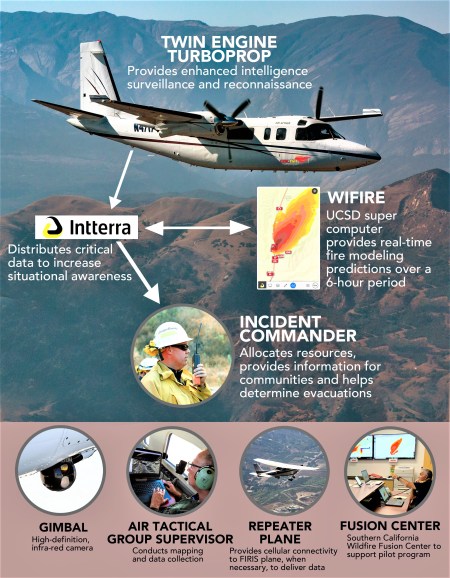
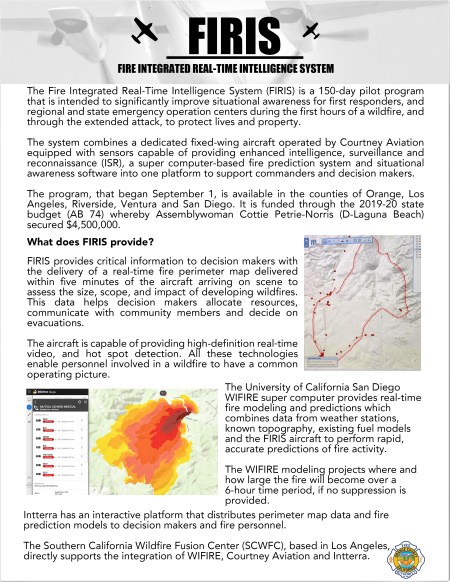 The FIRIS program is fast becoming one of the first air resources requested by Southern California fire agencies when a wildfire breaks out. The ability of the fixed-wing aircraft, equipped with cameras and infrared and radar sensors that can see through smoke, to provide real-time fire perimeter mapping and live high definition video has made a positive difference for incident commanders and decision-makers located in local Command Centers. Data sent from the twin-engine fixed-wing aircraft has also supported the UC San Diego WIFIRE Laboratory that uses its supercomputer to provide a fire spread progression model to be shared with the incident and command center staff.
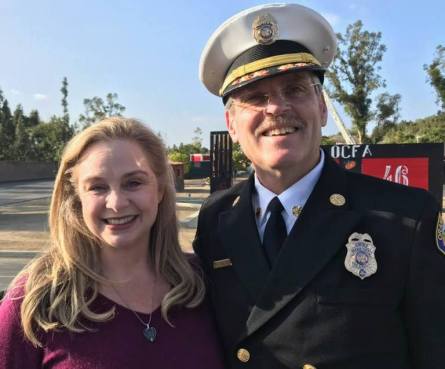
 “Nothing will replace the need for firefighters on the ground battling out of control wildfires. And I appreciate what our men and women do every day,” said Orange County Fire Authority Fire Chief Brian Fennessy. “I am also thankful that through collaboration, the FIRIS technology is helping to make a difference in decision-making which ultimately leads to suppressing wildfires more quickly.”
 One of the accomplishments I’m most proud of as a public official is advocating as a member of the board of directors of the
  Recently, Fire Chief Fennessy was invited by the Federal Emergency Management Agency (FEMA) to present his perspective on emergency management leadership to a national audience.
 Chief
Chief 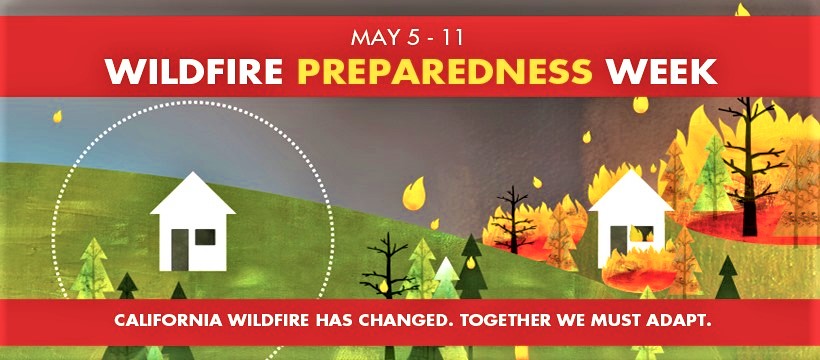
 This year during the week of May 5-11, CAL FIRE,
 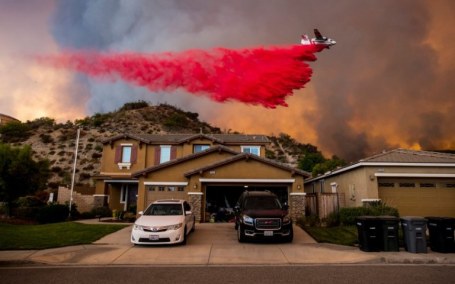 Make sure your vehicle is properly maintained with nothing dragging on the ground like trailer chains. All residents and vacationers need to be extra cautious outdoors because one less spark means one less wildfire.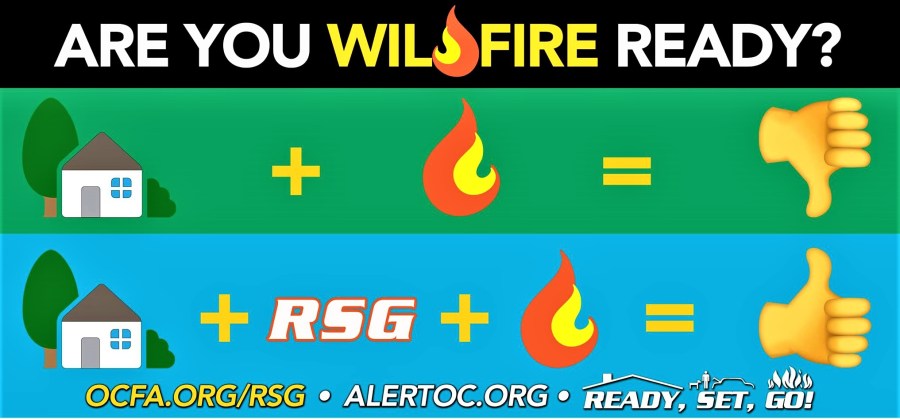
 Melissa Fox, Esq.
You must be logged in to post a comment.