
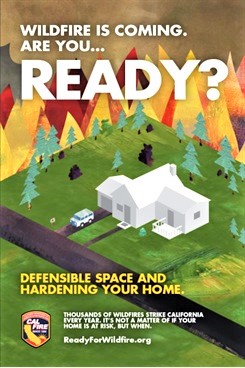
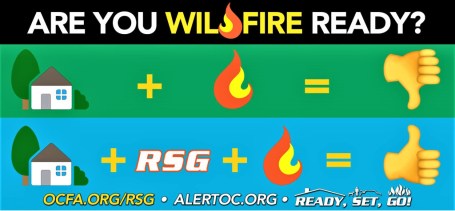
Being Ready for Wildfire starts with maintaining an adequate defensible space and by hardening your home by using fire resistant building materials.
In a recent blog post, I presented my firefighter son’s Family Emergency Plan information. Here are several low-cost ways to harden your home to maximize its ability to withstand a wildfire and to keep your family safe when you can’t evacuate.
Nearly all of the 68th Assembly District is considered “Wildland Urban Interface (WUI),” where human made structures and infrastructure (e.g., cell towers, schools, water supply facilities, etc.) are in or adjacent to areas prone to the danger of wildfire. Newer developmnents are pressing ever closer to wildland, increasing the danger of WUI wildfires and the need to be prepared.
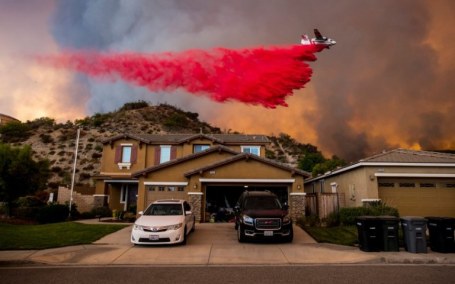
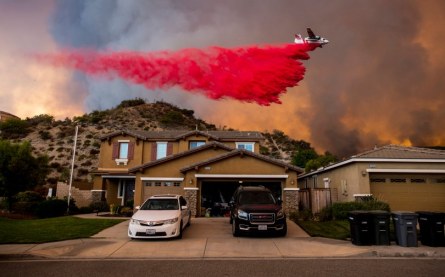
Taking the right actions now to prepare your family and home for the next California wildfire can save your property and your family members’ lives.
 Roof:
Roof:
The roof is the most vulnerable part of your home. Homes with wood or shingle roofs are at high risk of being destroyed during a wildfire. Build your roof or re-roof with materials such as composition, metal or tile. Block any spaces between roof decking and covering to prevent embers from catching.
Vents:
Vents on homes create openings for flying embers. Cover all vent openings with 1/16-inch to 1/8-inch metal mesh. Do not use fiberglass or plastic mesh because they can melt and burn.
Protect vents in eaves or cornices with baffles to block embers (mesh is not enough).
Eaves and Soffits:
Eaves and soffits should be protected with ignition-resistant or non-combustible materials.
Windows:
Heat from a wildfire can cause windows to break even before the home is on fire. This allows burning embers to enter and start fires inside. Single-paned and large windows are particularly vulnerable. Install dual-paned windows with one pane of tempered glass to reduce the chance of breakage in a fire. Consider limiting the size and number of windows that face large areas of vegetation.
Walls:
Wood products, such as boards, panels or shingles, are common siding materials. However, they are flammable and not good choices for fire-prone areas. Build or remodel your walls with ignition resistant* building materials, such as stucco, fiber cement wall siding, fire retardant, treated wood, or other approved materials. Be sure to extend materials from the foundation to the roof.
Decks:
Surfaces within 10 feet of the building should be built with ignition-resistant*, non-combustible, or other approved materials. Ensure that all combustible items are removed from underneath your deck.
Rain Gutters:
Keep rain gutters clear or enclose rain gutters to prevent accumulation of plant debris.
Patio Cover:
Use the same ignition-resistant* materials for patio coverings as a roof.
Chimney:
Cover your chimney and stovepipe outlets with a non-flammable screen. Use metal screen material with openings no smaller than 3/8-inch and no larger than 1/2-inch to prevent embers from escaping and igniting a fire.
Garage:
Have a fire extinguisher and tools such as a shovel, rake, bucket, and hose available for fire emergencies. Install weather stripping around and under the garage door to prevent embers from blowing in. Store all combustible and flammable liquids away from ignition sources.
Fences:
Consider using ignition-resistant* or non-combustible fence materials to protect your home during a wildfire.
Driveways and Access Roads:
Driveways should be built and maintained in accordance with state and local codes to allow fire and emergency vehicles to reach your home. Consider maintaining access roads with a minimum of 10 feet of clearance on either side, allowing for two-way traffic. Ensure that all gates open inward and are wide enough to accommodate emergency equipment.
Trim trees and shrubs overhanging the road to allow emergency vehicles to pass.
Clearly Marked Address:
Make sure your address is clearly visible from the road.
Water Supply:
Consider having multiple garden hoses that are long enough to reach all areas of your home and other structures on your property. If you have a pool or well, consider getting a pump.
Watch CalFire’s video on harding your home to protect from wildfire:
Useful Links:
Wildfire is Coming: Are You Ready?
Fire Information Engine—Preparing Your Home
University of California—Fire Resources and Information
Orange County County Authority — Ready, Set, Go!
Orange County County Authority — Wildland Fire Danger Rating
Note: Ignition-resistant building materials are those that resist ignition or sustained burning when exposed to embers and small flames from wildfires. Examples of ignition-resistant materials include “non-combustible materials” that don’t burn, exterior grade fire-retardant-treated wood lumber, fire-retardant-treated wood shakes and shingles listed by the State Fire Marshal (SFM) and any material that has been tested in accordance with SFM Standard 12-7A-5.
 Family Emergency Plans should include (1) an emergency family communication plan in case of separation, (2) consideration of the special needs of each member of your household (such as medications or medical equipment), and (3) plans for your most important documents (such as identification and insurance).


 The FIRIS program is fast becoming one of the first air resources requested by Southern California fire agencies when a wildfire breaks out. The ability of the fixed-wing aircraft, equipped with cameras and infrared and radar sensors that can see through smoke, to provide real-time fire perimeter mapping and live high definition video has made a positive difference for incident commanders and decision-makers located in local Command Centers. Data sent from the twin-engine fixed-wing aircraft has also supported the UC San Diego WIFIRE Laboratory that uses its supercomputer to provide a fire spread progression model to be shared with the incident and command center staff.
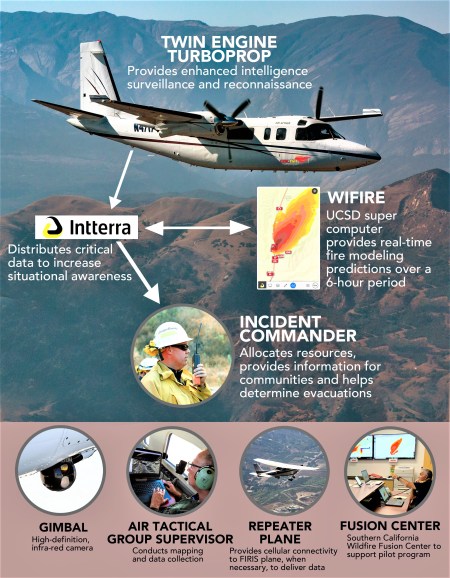 “Nothing will replace the need for firefighters on the ground battling out of control wildfires. And I appreciate what our men and women do every day,” said Orange County Fire Authority Fire Chief Brian Fennessy. “I am also thankful that through collaboration, the FIRIS technology is helping to make a difference in decision-making which ultimately leads to suppressing wildfires more quickly.”
 One of the accomplishments I’m most proud of as a public official is advocating as a member of the board of directors of the
  Recently, Fire Chief Fennessy was invited by the Federal Emergency Management Agency (FEMA) to present his perspective on emergency management leadership to a national audience.
 Chief
Chief 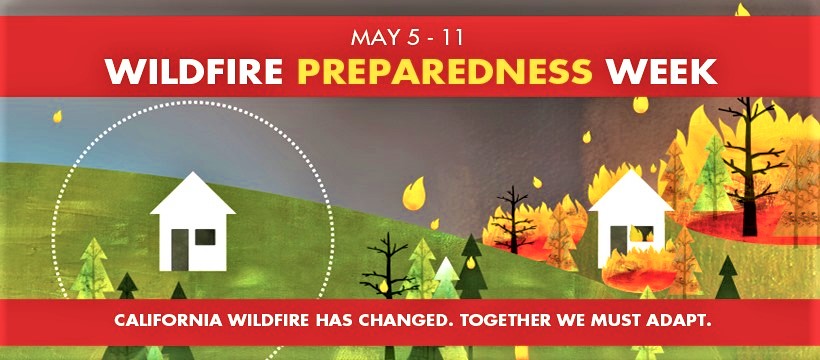
 This year during the week of May 5-11, CAL FIRE,
  Make sure your vehicle is properly maintained with nothing dragging on the ground like trailer chains. All residents and vacationers need to be extra cautious outdoors because one less spark means one less wildfire.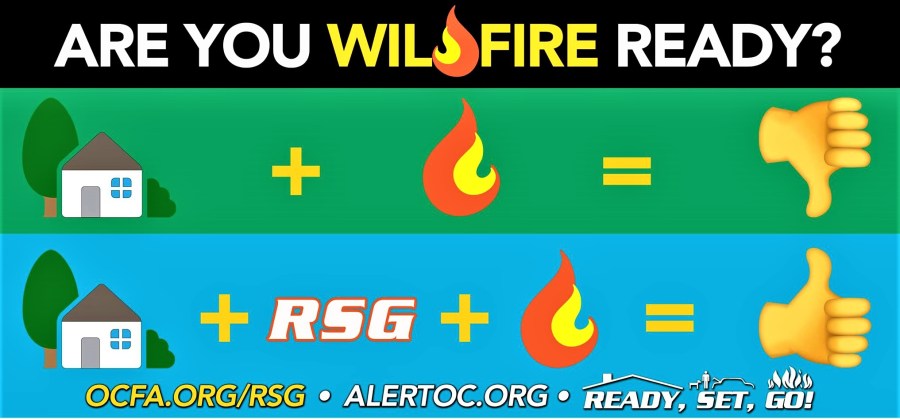
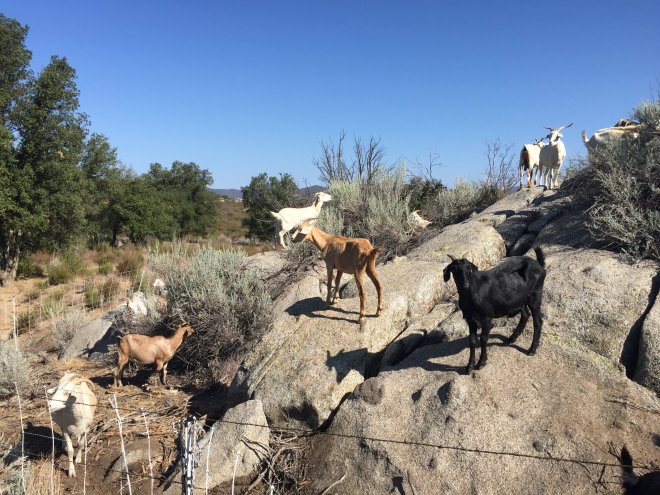
 Goats.
 Melissa Fox, Esq.
You must be logged in to post a comment.